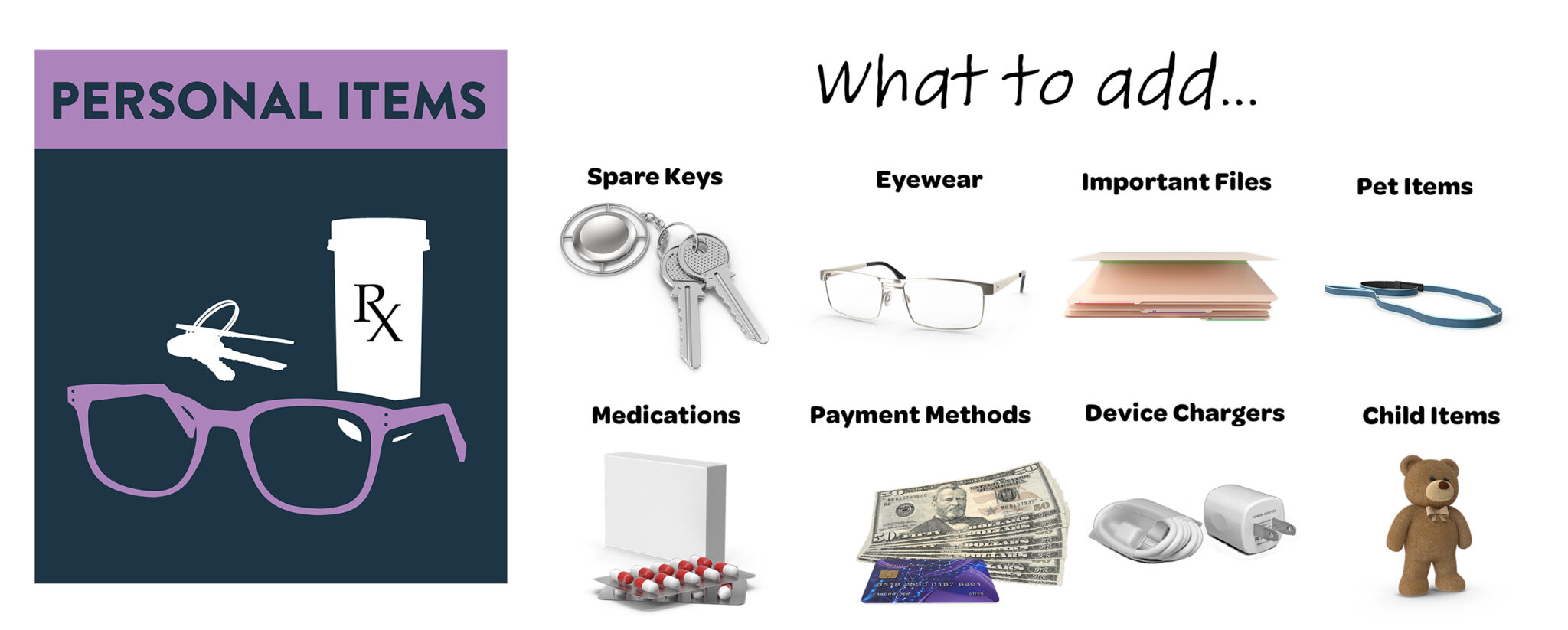
Include spare keys for your home, vehicle, office, safety deposit box, and any storage units or outbuildings where emergency supplies might be stored. Keep these separate from your daily keychain since your primary keys could be lost, damaged, or inaccessible during disasters.
Include a backup supply of all essential prescription medications, over-the-counter pain relievers, antihistamines, and any life-saving medications like inhalers or EpiPens. Store medications in their original labeled containers to avoid confusion and provide dosage information to medical personnel if needed. Since insurance companies won’t cover extra emergency supplies, build your backup stock by refilling prescriptions a few days early each month and setting aside the excess pills in your emergency kit. Always note expiration dates on your backup supply and rotate medications before they expire by using the older emergency supply and replacing it with fresh prescriptions.
Include spare prescription glasses or contact lenses as broken or lost eyewear during an emergency can be debilitating and dangerous. Store spare glasses in a protective hard case to prevent damage, and keep contact lenses in their original sealed containers with expiration dates clearly marked. Include a glasses repair kit for emergency fixes. If you wear contacts, pack extra solution, making note of its expiration date.
Keep a supply of cash in small bills ($1, $5, $10, $20) since credit cards and electronic payments may not work when power grids or communication networks fail. Consider the amount needed for several days of basic expenses like food, fuel, lodging, or transportation if you need to evacuate or if normal services are disrupted. Include a few blank checks as backup payment options for situations where cash isn’t sufficient and electronic systems are down – some businesses may still accept checks when card readers fail. Write down or photograph important account information, credit card numbers, and bank contact information in case cards are lost or damaged.
Store copies of essential documents in waterproof containers or sealed plastic bags, including identification (driver’s licenses, passports, Social Security cards), insurance policies (home, auto, health, life), medical records and prescription information, bank account numbers and financial records, property deeds or rental agreements, and important legal documents like wills or power of attorney forms. Include recent photos of family members for identification purposes if you become separated. Keep both physical copies and digital versions stored on a waterproof USB drive or uploaded to secure cloud storage accessible from any internet connection. Document serial numbers and take photos of valuable possessions for insurance claims.
Include chargers for all devices that could be critical during emergencies, especially smartphones, tablets, two-way radios or walkie-talkies, flashlights and headlamps with rechargeable batteries, and any medical devices like CPAP machines, glucose monitors, or hearing aids that family members depend on.
Include essential supplies for each pet: at least a 7-day supply of food and water, medications and medical records, leashes, harnesses, and carriers for safe transport, waste bags and litter for cats, comfort items like favorite toys or blankets to reduce stress, and current photos of pets in case they become lost. Include identification tags with current contact information and consider microchipping pets before emergencies occur. Keep copies of vaccination records and any special dietary or medical needs clearly documented.
Include age-appropriate supplies for each child: diapers, formula, baby food, and bottles for infants, along with comfort items like favorite stuffed animals, blankets, or pacifiers to reduce anxiety during stressful situations. Add any special medications, medical equipment, or dietary needs specific to each child. Include copies of important documents like birth certificates, medical records, and custody papers if applicable.
What else is in your kit?