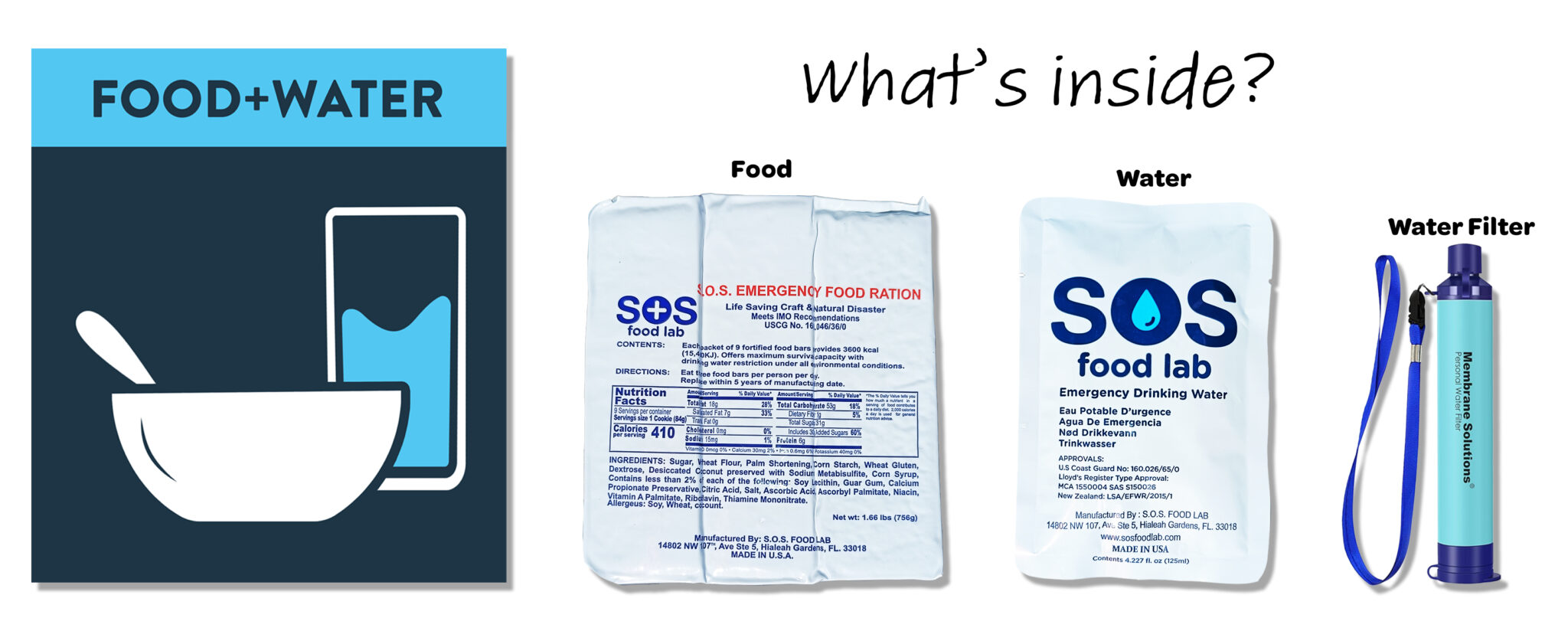
The rations consist of nine (9) 400-calorie food bars, which have a 5-year shelf life from the manufacture date. Because food rations have a long shelf life, they should be your last resort during an emergency. If available, first eat refrigerated and frozen foods, then non-refrigerated perishables like fruits and breads, followed by pantry items. Take a moment to review the ingredients of your food rations to ensure that all ingredients can be tolerated by members of your household.
The water pouches contain 4.227 ounces (125ml) of purified drinking water per pouch, which have a 5-year shelf life from the manufacture date. Because water pouches have a long shelf life, they should be your last resort during an emergency. If available, first use tap water (if safe), then bottled water, followed by other available clean water sources before consuming emergency water rations. If alternate water sources are scarce, use water pouches only for drinking, and not for cleaning or cooking.
The personal water filter filters out 99.99% of harmful substances and has a filtration capacity of up to 1,320 gallons (5,000 liters). The filter is designed primarily to remove biological risks like parasites and bacteria. If you suspect that a water source could have chemicals, do not use it as a water source, not even with the straw. Because drinking from an untreated water source will always pose some risk, even with the use of the filtration straw, this should be your last resort during an emergency. If available, first use tap water (if safe), then bottled water, followed by your water pouches, then boiled water from natural sources before relying on filtered water from questionable sources. After each use, backwash the filter with clean water if available and store it vertically to dry for optimal performance and longevity.